Image Cropper

 Known for
 At a glance
Department : Screenplay Writing
Education : Bachelors
Lives in : Los Angeles
Email :






 Biography
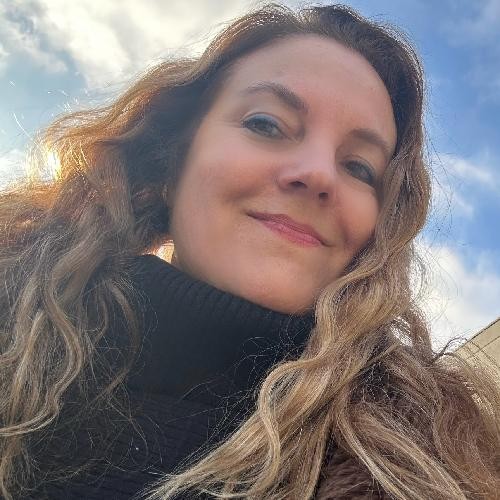
Lisa Cole is an award-winning writer/director whose globally-informed storytelling, shaped by living with 201 host families across 12 countries, focuses on authentic narratives of resilience, identity, and social justice.
Cole's 2024 Oscar-Shortlisted short film "Bienvenidos a Los Angeles," inspired by a true immigration story and filmed at LAX Airport, won the Diversity in Cannes Short Film Showcase, sponsored by Viola Davis, and is distributed worldwide on Kanopy and other platforms. Her short films have screened at multiple Oscar-qualifying festivals, building on early recognition when her Loyola Marymount University student thesis film was selected as a Regional Finalist for the Student Academy Awards.
Currently, Cole is developing high-profile feature projects including "Diamond Girls" with Academy Award-nominated producer Laura Bickford. Her feature film "Girl Named Sue" was in development with Bickford and Academy Award-winning filmmaker Jean-Marc Vallée at the time of his passing. Her personal project "Filthy" is a two-time Sundance Development Track finalist, recipient of the 2025 Alliance for Women Directors Rising Director Fellowship, and is being developed under the mentorship of acclaimed director Niki Caro.
Selected for the prestigious 2025 The Writer's Lab, Cole is a fellow with Final Draft/Stowe Story Labs, Women in Film, Athena Lab, and Cine Qua Non. Her documentary work spans major networks including A&E, BET, and VH1/MTV, with commissioned films for the Sundance Institute and Gates Foundation addressing critical issues of women's health and safety in Kenya and Democratic Republic of Congo.
Cole's collaborations include working alongside industry luminaries Jean-Marc Vallée, Laura Dern, Demi Moore, Catherine Hardwicke, Lily Rabe, Shailene Woodley, and Nathan Ross. Other festival accolades include the Jury Prize for Best Documentary Short Film at the Newport Beach Film Festival and numerous festival wins, Winner of the Page International Screenwriting Award and recognition for two screenplays as Quarter-Finalist and Top 15% with the Academy Nicholl Fellowship.
A Loyola Marymount University School of Film & Television graduate and juror for the Oscar-qualifying Hot Springs Documentary Film Festival, Cole served on the festival's board for six years and maintains professional affiliations with Film Independent, Women in Film, Film Fatales, and Alliance for Women Directors. She resides in Los Angeles with her family.
FILTHY was born poolside in an apartment complex in Santa Ana, California, the moment my mother - freshly converted to Born Again Christianity by our neighbor - pointed out that my "cherry was showing" as my bikini top had shifted. That shame seared through my young body. Two months later, after she married a pastor she barely knew, we were uprooted to Amity, Arkansas (population 400), where my understanding of my own body became a battleground.
Growing up in small-town Arkansas, I was heavily indoctrinated with Christian values centered around purity. My mother, brother, and I attended church several times a week. Men in our congregation were considered spiritual elders, and women were subservient to the patriarchy. I was taught that my body is a 'temple of God,' and I should 'save myself' for marriage.
The film confronts this reality: girls systematically disconnected from their bodies through purity culture. Today, many still believe tampons "steal" virginity - a harmful myth perpetuated while abstinence-only education in 37 states leaves young people unsafe and unprepared. To date, the Conservative agenda has pumped $2B+ into abstinence-only programs nationwide. With reproductive rights under siege, the pipeline from childhood indoctrination to adult control remains intact.
CREATIVE VISION
"Filthy" demands the social realism filmmaking approach of Andrea Arnold, whose work proves that working-class female stories gain power through restraint - letting environment, gesture, and subtext carry emotional weight. I'm aiming for character-driven naturalism through quiet observation, where landscape becomes character itself. This approach prioritizes rural authenticity and environmental immersion over exposition.
My visual language draws from filmmakers who master psychological texture: Céline Sciamma's intimate gaze, Lynne Ramsay's visceral sound design, Kelly Reichardt's patient observation where every gesture carries meaning.
I'm influenced by photographers who capture youth's transformation: Sally Mann's "Candy Cigarette" with its haunting intimacy, Ashley Armitage's tender documentation of female adolescence, and Alec Soth's decaying rural landscapes that reveal beauty in abandonment.
Arkansas itself becomes a character: kudzu strangling abandoned buildings like shame choking possibility, cicadas electrifying humid air with the urgency of sexual awakening, fireflies puncturing summer darkness as moments of grace. This gothic landscape mirrors the lush complexity of female adolescence breaking free from shame -natural abundance constrained by artificial boundaries.
THE STORY
At its heart, "Filthy" follows Cass's heartbreaking quest to be seen and forge genuine connection in an environment designed to silence her. She exists in that liminal space between childhood and womanhood, between her body's natural development and society's demand for purity. Her desperation for authentic relationship—with her mother, with herself, with others -drives every choice, even her most destructive ones.
When Cass smears menstrual blood across her face like war paint and refuses to sign the purity pledge, she transforms weaponized shame into defiant power. Her rebellion emerges not from anger alone, but from a profound need to be truly known.
The mother-daughter relationship drives the emotional core. Diana, carrying her own unhealed wounds, projects shame onto Cass while desperately seeking redemption through religious conformity. Their dynamic reveals how conservative cultures fracture the very bonds meant to nurture young women, leaving both mother and daughter isolated in their pain.
INTENTIONS
"Filthy" serves as both battle cry and invitation to reclaim what's ours. For women who've experienced oppression, the film validates their experiences and offers healing. For broader audiences, it illuminates how seemingly benign teachings inflict lasting damage.
In our current moment, when female bodily autonomy faces unprecedented attack, "Filthy" asks essential questions: Why are girls made gatekeepers of sexuality? How do we break cycles of shame that pass from mothers to daughters?
I hope to develop this deeply personal film with Film Independent advisors to further refine my characters' emotional journey and prepare me for financing. I aim to attach the right producer to make a film that reverberates far and wide and sets the Religious Right's hair on fire.
Through visceral honesty about how shame lives in young bodies, "Filthy" transforms discomfort into liberation, proving that authentic self-expression -messy, complicated, utterly human—is the truest form of purity.
 News
NewsPlease log in to write a review.
At a glanceDepartment : Screenplay Writing
Education : Bachelors
Lives in : Los Angeles
Email :
 Videos
 Certificates
Please log in to write a review.




Prasun Bera invited on to review his comment.
on December 5th, 2016Prasun Bera replied on your comment.
on December 5th, 2016Prasun Bera invited on to review his comment.
on December 5th, 2016Prasun Bera replied on your comment.
on December 5th, 2016Prasun Bera invited on to review his comment.
on December 5th, 2016Prasun Bera replied on your comment.
on December 5th, 2016