Image Cropper


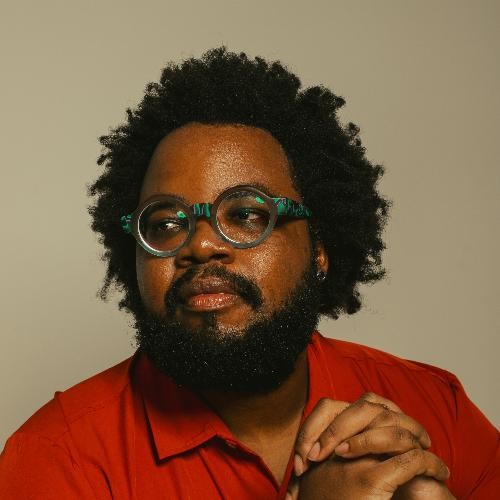
 Known for
 At a glance
Department : Direction
Education : Masters
Lives in : Goiânia
Email :






 Biography
I’m Wadson Alvim, a graduate in Cinema and Audiovisual Studies from the State University of Goiás, and I hold a Master’s degree in Cultural Performances from the Federal University of Goiás. I work as a director, screenwriter, and cultural producer through my own company, Ritus Studio. My company also has a game development department, where I serve as a narrative designer. I directed my first short film, Tudo Que Eu Preciso (All I Need, 2015), and in 2025, my second film, Queimem a Bruxa (Burn the Witch).
My second film, Burn the Witch, is a short film in which I evoke the mythological figure of the witch as a metaphor for the Black woman, whose reputation, memory, and very existence are constantly vilified, a dynamic especially present in small communities. The film was born from my desire to create images that subvert the colonial imagination that, in Brazil, has marked the Black community as a threat and placed a target on its back from the time of slavery to the present day. We live in a world where the spread of false information spreads like a virus and where reputations can be destroyed with a single click. For this reason, I felt the need to take a closer look at these urgent issues. It is in this context that the proposal for the film was born, initially inspired by the central idea of the award-winning graphic novel Sabrina, the first comic book ever nominated for the Man Booker Prize.
Nick Drnaso’s work caught my attention precisely because of the way it reveals, with precision, how the circulation of fake news and conspiracy theories directly affects human relationships, blurring the boundaries between the real and the fictional. Just as the graphic novel follows Sabrina’s disappearance and the devastating impact this event has on her family and friends, my film seeks to reflect on how contemporary tragedies are mediated by fragmented narratives, disinformation, and the relentless pace of digital updates, which so often prevent us from processing and analyzing facts more deeply. With this project, I aim to confront this reality and invite viewers to reflect critically on the power and responsibility of information in society.
Brazil, the country with the largest Black population outside of Africa, continues to treat this population as the primary victim of marginalization and violence, a reality that has not changed with the arrival of the digital age. Within this context, my film positions itself in the tradition of Brazilian Black cinema, from pioneers such as Zózimo Bulbul and Adélia Sampaio to contemporary voices like Jeferson De, Yasmin Thayná, and Gabriel Martins, reaffirming the urgency of a cinema committed to the memory, aesthetics, and politics of Blackness in Brazil and Latin America.
Filmed in the small town of Orizona, my hometown in the interior of Goiás, Burn the Witch uses the Midwest not merely as a backdrop, but as a symbolic territory where popular imagination intertwines with the weight of historical violence. The city is portrayed both as a space of suffocation and as fertile ground for resistance within a conservative environment. Through light, landscape, and the presence of bodies on screen, I seek to immerse the viewer in a suspended time, where myth and the concrete reality of exclusion converge.
Finally, the proposal of the film is made concrete in my decision to portray a Black family in Goiás, a region historically marked by the actions of colonizers known as bandeirantes and by the strong presence of enslaved populations, even though it has often been represented in most stories as a predominantly white space. The narrative questions whether this family unit can still be a source of social cohesion in a Brazil transformed by the rapid expansion of its large cities over the past twenty years, in contrast with life in small towns, where time flows slowly, connecting past and present. In this setting, tradition and dreams intermingle, and every space holds ancient memories that directly affect the protagonist. Despite the silences and hidden emotions among family members, there is a latent generosity capable of revealing both their vulnerabilities and the strength required to withstand the tremors that threaten their bonds and risk dismantling this family.
Enjoy the film.
 News
NewsPlease log in to write a review.
At a glanceDepartment : Direction
Education : Masters
Lives in : Goiânia
Email :
 Videos
 Certificates
Please log in to write a review.


Prasun Bera invited on to review his comment.
on December 5th, 2016Prasun Bera replied on your comment.
on December 5th, 2016Prasun Bera invited on to review his comment.
on December 5th, 2016Prasun Bera replied on your comment.
on December 5th, 2016Prasun Bera invited on to review his comment.
on December 5th, 2016Prasun Bera replied on your comment.
on December 5th, 2016