


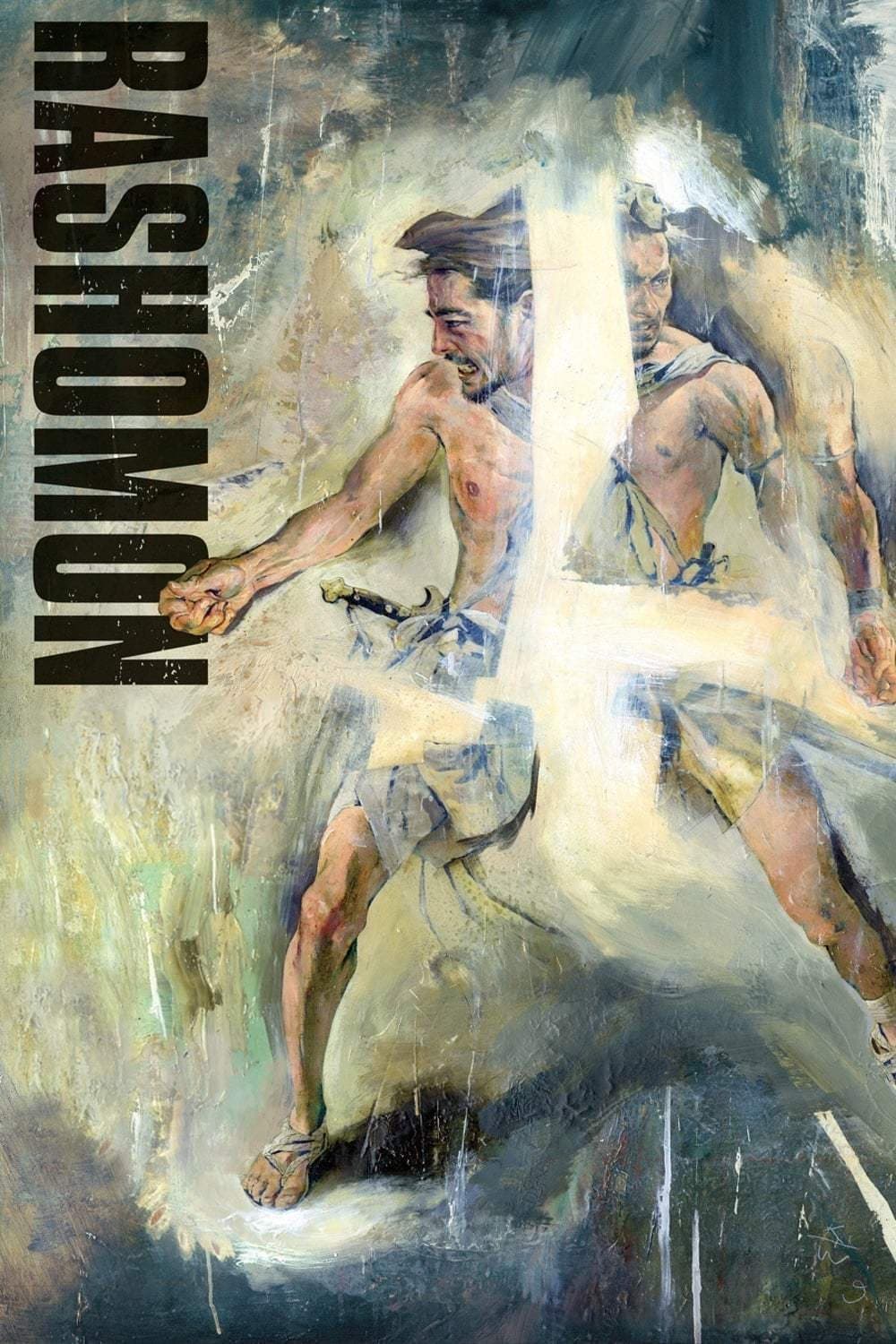
Rashomon (1950)
Rashomon
(1950)
Director : Akira Kurosawa
Producer : Minoru Jingo
Writers : Akira Kurosawa, Shinobu Hashimoto
Cinematographer : Kazuo Miyagawa
Editor : Akira Kurosawa
Music Director : Fumio Hayasaka


General Information
Completed On: 25 Aug, 1950
Duration: 1 hr 28 min 0 sec
Genres: Fiction
Language: Japanese
Country: Japan
Submitted By: CONTRIBUTORS CLUB
In Heian-era Kyoto, a woodcutter and a priest, taking shelter from a downpour under the Rashōmon city gate, recount a story of a recent assault and murder. Baffled at the existence of several conflicting accounts of the same event, the woodcutter and the priest are joined by a commoner. The woodcutter claims he had found the body of a murdered samurai three days earlier, alongside the samurai's cap, his wife's hat, cut pieces of rope, and an amulet. The priest claims he had seen the samurai travel with his wife on the day of the murder. Both testify in court before a policeman presents the main suspect, a captured bandit named Tajōmaru.
Tajōmaru testifies that he had followed the couple after spotting them traveling in the woods. He claims to have tricked the samurai into leaving the trail by lying about finding a burial pit filled with ancient artifacts. He then subdued the samurai and attempted to rape his wife, who initially tries to defend herself with a dagger. Tajōmaru then seduces her; the wife, ashamed of the dishonor of having been with two men, asks Tajōmaru to duel her husband so she may go with the man who wins. Tajōmaru agrees; the duel is fierce, and Tajōmaru claims to have killed the samurai only to find the wife had fled. At the end of his testimony, Tajōmaru states he had forgotten the wife's dagger, lamenting its loss. The priest notes that men lie even to themselves because they are weak.
The wife, having been found by the police, delivers different testimony; she claimed that Tajōmaru did assault her but afterwards left immediately. She freed her husband from his bonds, but he stared at her with contempt and loathing. The wife tried to threaten him with her dagger but then fainted from panic. She awoke to find her husband dead, having committed suicide with the dagger. In shock, she wandered through the forest until she came upon a pond. She attempted to drown herself but failed. The commoner notes that women use their tears to hide lies and end up fooling themselves.
The samurai's testimony is heard through a medium. He claimed that after the assault, Tajōmaru asked the wife to marry him. To the samurai's shame, she accepts, asking Tajōmaru to kill the samurai first. This disgusted Tajōmaru, who then gave the samurai the choice to let her go or have her killed. Through the medium, the samurai expresses approval for this gesture. The wife then broke free and fled, and Tajōmaru unsuccessfully gave chase. After being set free by an apologetic Tajōmaru, the samurai states he killed himself with the dagger. Later, he felt someone remove the dagger from his chest, but could not tell who.
The woodcutter fiercely proclaims that all three stories are falsehoods and admits that he saw the samurai killed by a sword instead of a dagger. The commoner pressures the woodcutter to admit that he had seen the murder but lied to avoid getting in trouble. According to the woodcutter, Tajōmaru begged the wife to marry him. She instead freed her husband, expecting him to kill Tajōmaru. The samurai refused to fight, explaining that he would not risk his life for a ruined woman. Tajōmaru rescinded his promise to marry the wife; the wife rebukes them both for failing to keep their promises. The two men unwillingly enter into a feeble duel; the samurai is disarmed and begs for his life, and Tajōmaru kills him. The woodcutter ends his account by stating that the wife fled afterwards, and that Tajōmaru stole the samurai's sword and limped away.
The woodcutter, the priest and the commoner are interrupted by the sound of a crying baby. They find a child abandoned in a basket along with a kimono and an amulet; the commoner steals the items, for which he is rebuked by the woodcutter. The commoner deduces that the woodcutter had lied not because he feared getting in trouble, but because he had stolen the wife's dagger to sell for food. He leaves, claiming that all men and women are motivated only by self-interest.
Meanwhile, the priest has been attempting to soothe the baby. The woodcutter attempts to take the child after the commoner's departure; the priest, having lost his faith in humanity after the events of the trial and the commoner's actions, strongly recoils. The woodcutter explains that he intends to raise the child. Having seen the woodcutter's true and well-meaning intentions, the priest tells him that his faith in men has been restored. As the woodcutter prepares to leave, the rain stops and the clouds part, revealing the sun.
-
DirectorAkira Kurosawa
-
ProducerMinoru Jingo
-
WritersAkira Kurosawa, Shinobu Hashimoto
-
CinematographerKazuo Miyagawa
-
EditorAkira Kurosawa
-
Music DirectorFumio Hayasaka
-
Film TypeFiction
-
GenresFeature
-
Runtime1 hours 28 minutes 0 seconds
-
Completion Date25 Aug, 1950
-
Production Budget140000 USD
-
Country of OriginJapan
-
Country of FilmingJapan
-
Film LanguageJapanese
-
Shooting Format
-
Aspect Ratio
-
Film ColorColor
-
Student ProjectNo
-
First-time FilmmakerNo
Daiei Film
Worldwide: