






General Information
Completed On: 21 Jan, 2020
Duration: 17 min 14 sec
Genres: Fiction, Short
Language: Italian
Country: Italy
Submitted By: Luca Caserta
Festival Rating 8.0
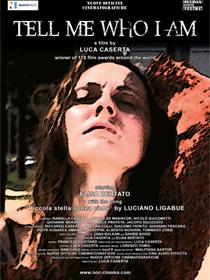
A woman wanders through the city looking for herself and her lost memory...
The movie, shooted in the suburbs of Verona (Italy), deals with the difficult and delicate issue of violence against women, facing it from the point of view of the search for the own identity and lost dignity. The protagonist is indeed a woman suffering from a severe form of amnesia following a sexual violence and she doesn't remember anything of her life and her past, wandering around the city like a homeless person, in the grip of fear and despair that a similar experience can trigger. Listless and exhausted, she hides and avoids any kind of contact, becoming almost invisible to the eyes of others and living in a sort of limbo in which time slowly slips on her. The ending remains open to the possibility to start again, living with new self-awareness.
-
Film TypeFiction, Short
-
GenresDrama
-
Runtime17 minutes 14 seconds
-
Completion Date21 Jan, 2020
-
Production Budget20.000 EUR
-
Country of OriginItaly
-
Country of FilmingItaly
-
Film LanguageItalian
-
Shooting FormatDigital
-
Aspect Ratio16:9
-
Film ColorColor
-
Student ProjectNo
-
First-time FilmmakerNo
Winner of 176 Awards - Full list link
http://www.noc-cinema.com/produzioni/cortometraggi/dimmi-chi-sono/dimmi-chi-sono-premi-e-riconoscimenti/
Nuove Officine Cinematografiche
Italy: All Rights
Director's Biography
Multi-award winning director and screenwriter
Luca Caserta graduated in Filmmaking at Movie Academy of Cinecittà (Rome – Italy), majoring in movie direction and screenwriting with some Italian masters of cinema as Carlo Lizzani, Giacomo Scarpelli, Franco Brogi Taviani and Mario Brenta. Here he also studied cinematography, shooting and cinema with Giuseppe Pinori, Daniele Nannuzzi and Giuseppe Berardini and attended the workshops held by Pupi Avati, Carlo Verdone and Luis Bacalov. At Centro Sperimentale di Cinematografia in Rome he deepened the study of direction of photography with Giuseppe Lanci, subject he in addition studied with Alessandro Pesci (Sentieri Selvaggi Film School - Rome) and Marco Bassano (Shot Academy - Rome). He also studied Film Production with Gianluca Arcopinto.
After writing and directing several plays, achieving important recognitions (including the “Premio Calcante” by SIAD – Italian Society of Dramatic Authors), he has dedicated himself exclusively to cinema and audiovisuals for several years now. He is author of short films, documentaries and art videos.
In 2011 he wrote, directed and co-produced the short film “Inside the Mirror”. The editing supervision is by Ugo De Rossi, editor, among others, of Fellini, Pasolini, Bertolucci, Petri and Rosi. The film, along with the following “Out of the Depths" (2014) and “The Other Side of the Moon” (2016), is part of the “trilogy on the double”, focused on the investigation of what is hidden in the deepest part of the human soul. His documentary “The Canvas Forge” (2014) about the birth of a painting is available on Prime Video. His movies have been presented at many Festivals (Cannes Film Festival, Premi David di Donatello, Berlin European Short Film Festival, Roma Cinema DOC, Miami Independent Film Festival, Los Angeles CineFest, Clermont-Ferrand Film Festival, Hollywood Screenings Film Festival, Canada's World International Film Festival, etc.).
His acclaimed short film “Tell Me Who I Am” (2020), garnered an astounding 180 awards in several categories in the film festivals all around the world, among which the Award of Excellence Special Mention in the category “Redemption/Social Justice/Protest” and the Award of Excellence for Direction at the Best Shorts Competition (California – USA) with the following motivation of the Jury: “A unique take on the serious issue of violence against women, the mental and physical abandonment and loss of dignity people face every day. A stirring and compelling performance by Elisa Bertato. The judges firmly believe that the film is exceptional, showing depth of craft and creativity that is truly unique and has decided to confer it the highest honors that have honored previous filmmakers with exceptional talent, including Oscar winners, Emmy and BAFTA winners”. The soundtrack includes the song “Piccola stella senza cielo” by the Italian rock star Luciano Ligabue, courtesy of the artist and of Warner Music Italia/Warner Chappell Music Italiana.
Most of his short films are available on YouTube, Vimeo and Prime Video.
In 2024 he wrote and directed his new short film “The Reach” based upon a short story by Stephen King. The film was produced by Nuove Officine Cinematografiche and shot in Verona (Italy). The soundtrack features the song “Moonlight Motel” by Bruce Springsteen, courtesy of the artist and Sony Music Entertainment/Sony Music Publishing.
Luca Caserta's works are characterized by touching different genres, styles and themes, from comedy, to social/civil commitment and human rights, to the investigation of the most obscure aspects of the human psyche, to the supernatural, highlighting a certain artistic versatility.
As author, he's member of SIAD (Italian Society of Dramatic Authors) and of SIAE (Italian Society of Authors and Editors). He is one of the jurors of the Sunset Film Festival (Los Angeles – USA) and has been curator of the Short Film Section of Schermi d’Amore Film Festival (Italy). He lives and works between Verona and Rome. More infos on his official website www.lucacaserta.com.
Director's Statement
The movie, shooted in the suburbs of Verona (Italy), deals with the difficult and delicate issue of violence against women, facing it from the point of view of the search for the own identity and lost dignity. The protagonist is indeed a woman suffering from a severe form of amnesia following a sexual violence and she doesn't remember anything of her life and her past, wandering around the city like a homeless person, in the grip of fear and despair that a similar experience can trigger. Listless and exhausted, she hides and avoids any kind of contact, becoming almost invisible to the eyes of others and living in a sort of limbo in which time slowly slips on her. The ending remains open to the possibility to start again, living with new self-awareness.